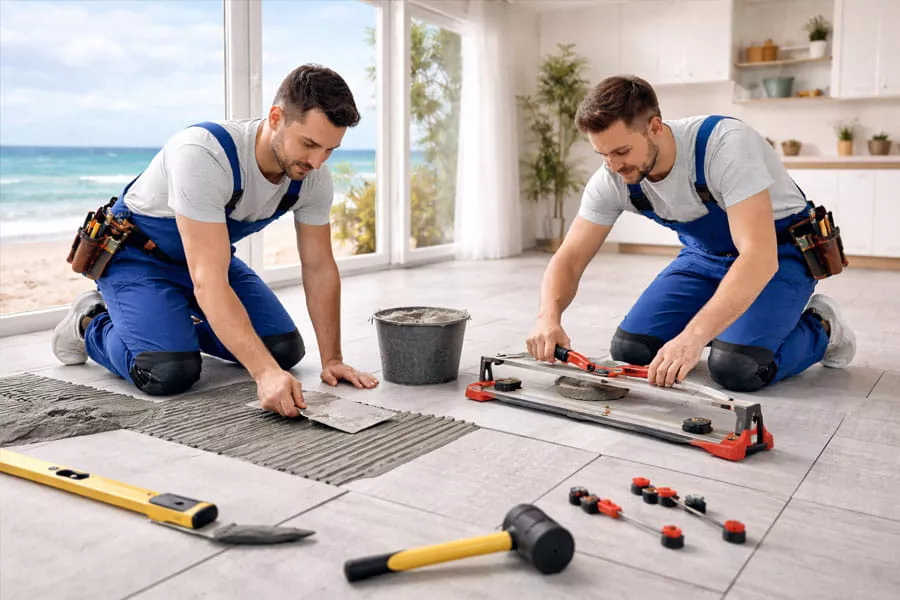
Living near the ocean sounds perfect until your floors start falling apart. The salt-laden moist wind of the sea causes troubles most people don’t think of before relocating to the shoreline.
Last summer, Nicole, one of the residents of Pensacola, visited her friend’s beach house. She’d spent a fortune on beautiful hardwood throughout. Two years in, and the floors looked like a roller coaster. The floors were so warped that one could trip walking across the living room. The lady was heartbroken. All that money spent for nothing.
Coastal climates demand specific flooring materials that can take a beating. Regular floors really struggle with all that high humidity around the ocean. They just get messed up over time. You want something that does not absorb moisture like a sponge would. Surfaces that handle wetness better.
What works near the water and what does not, that is the thing to figure out. Some options survive fine, others you should skip entirely.
Why Your Regular Floors Won’t Make It
Water is sneaky. It doesn’t just come from spills and tracked-in rain. The air itself carries moisture that seeps into everything. Floors absorb this humidity, swell up, then shrink back down when things dry out temporarily.
Solid hardwood might look stunning at the store. Put it in a coastal home and watch what happens. The constant expansion and contraction create gaps. Boards start cupping. Some crown upward. Eventually, you’re tearing it all out.
Worse than warping is what grows underneath. Mold and mildew growth thrives in damp conditions between your floor and subfloor. You won’t see it until black spots start appearing or someone gets sick. Resistance to moisture isn’t optional here. It’s mandatory for protecting your family and your wallet.
Floors That Actually Survive Beach Life
1- Luxury Vinyl Plank Wins Hands Down
Luxury vinyl plank, aka LVP, has become the default choice for beach properties. Walk into any newer coastal house and you’ll probably see it. Why? Because it works.
This stuff is genuinely waterproof. Not “resistant” where you still panic over spills. Waterproof. Dump water on it, wipe it up whenever, no damage. Done. Additionally, it handles humidity without breaking a sweat.
Installing luxury vinyl plank LVP takes less time than traditional wood too. Most versions click together and float over whatever’s underneath. That flexibility means the floor adjusts to temperature swings without buckling. Cleaning takes about thirty seconds. Sweep the sand, mop occasionally, and you’re golden. Perfect for high traffic areas where kids constantly run in from the beach.
2- Porcelain and Ceramic Tile Built for Battle
Porcelain and ceramic tile have dominated beach houses for good reason. This flooring material genuinely doesn’t care about water. Whether it is humidity, spills, wet dogs shaking off after swimming, or any other wet thing, nothing succeeds in harming it.
Porcelain beats ceramic slightly because it’s denser and absorbs almost zero water. These are best for entryways and bathrooms where puddles form regularly. The only vulnerability is grout lines between tiles. Seal those properly once a year and moisture can’t reach your subfloor.
These tiles do feel cold on bare feet during cooler months. But that same coolness feels amazing when it’s hot outside. Trade-offs, right?
3- Engineered Hardwood as a Compromise
Still love the idea of wood? Engineered hardwood flooring offers a middle path. It’s built with real wood veneer over plywood layers. That construction handles moisture way better than solid hardwood planks.
Just know it’s not waterproof. Standing water will still cause damage. You absolutely need proper installation with moisture barriers underneath. Regular maintenance is also essential for keeping that protective finish intact and resealing when needed.
Think of engineered wood for bedrooms and living spaces, not bathrooms or mudrooms. It delivers authentic wood character without the full risk of solid planks. Quality varies tremendously though. Pay attention to how thick that top wood layer is. Thicker means you can refinish it later instead of replacing everything.
4- Wood-Look Tile Tricks Everybody
This deserves its own section because it’s becoming hugely popular. Porcelain tiles designed to look like wood have gotten insanely realistic. Run your hand across it and you’ll get wood grain texture. The planks show natural color variations just like real lumber.
You get wood’s aesthetic appeal combined with tile’s total water resistance. Install it in kitchens, bathrooms, anywhere water shows up regularly. It’ll outlast you, honestly.
The cooler surface temperature might bother some people in winter. Adding radiant floor heating underneath solves that problem if you want to spend extra. Either way, this ranks as a top flooring option for anyone wanting beauty and practicality in coastal climates.
What Fails Miserably in Humid Places
Standard hardwood floors will betray you near the coast. It doesn’t matter how carefully you maintain them. The environment wins that fight. Bamboo gets hyped as moisture-friendly, but it dents like crazy and still hates constant dampness.
Laminate flooring looks tempting on price tags. Don’t fall for it. Regular laminate and humidity are enemies. Even “water-resistant” laminate isn’t 100% waterproof. One serious leak or flood and your entire floor is trash.
Carpet near the ocean is plain foolish. It holds onto moisture and never fully dries. That creates perfect conditions for mold and mildew growth underneath where you can’t see until you’ve got major problems. Keep carpet out of humid homes entirely or use it only in one well-controlled bedroom.
It’s Time to Find Floors That Won’t Betray You!
The Floor Store gets what actually works in tough environments because we’ve satisfied countless coastal homeowners. We won’t sell you something pretty that fails in six months. Moreover, our team understands real-world conditions, not showroom fantasies.
Stop second-guessing whether your floors can handle beach life. Today’s flooring materials are engineered specifically for challenging situations. Whether you lean toward engineered hardwood flooring or prefer bulletproof luxury vinyl plank LVP, The Floor Store stocks options designed for harsh coastal conditions.